UL 1046 and NFPA 96: What Commercial Grease Filters Must Do
Two names appear on every serious hood specification in North America. Here is what each one actually covers, what the tests measure — and what they deliberately do not — and how to check a supplier's claims before the inspector does it for you.
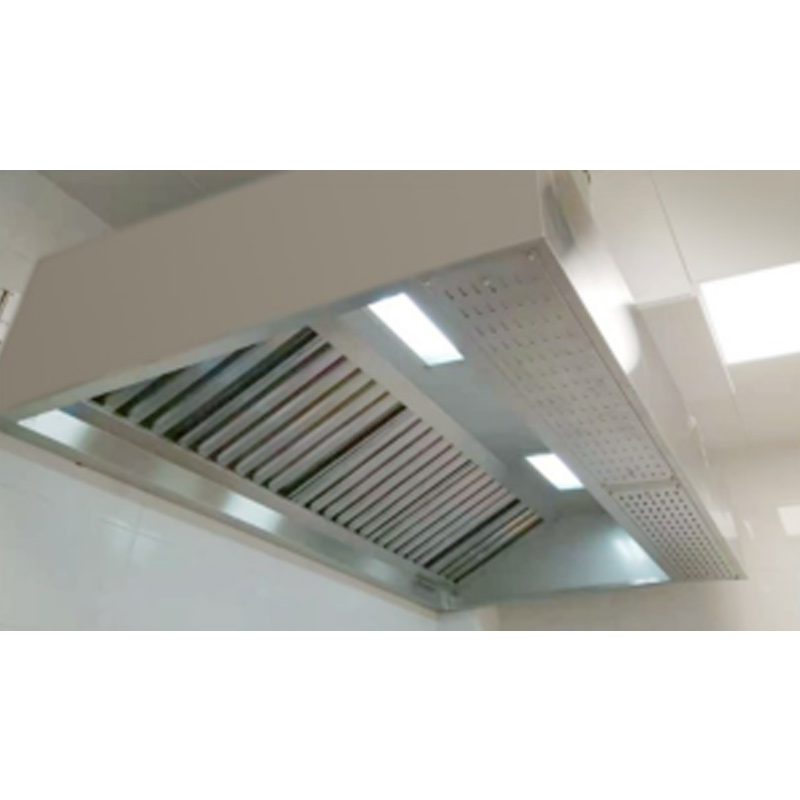
The two standards, and how they divide the work
NFPA 96 is the fire code framework. The Standard for Ventilation Control and Fire Protection of Commercial Cooking Operations tells kitchen owners, hood designers and inspectors how the whole system must behave: airflow, clearances, suppression, cleaning intervals and the grease removal devices at the hood. It says what the system must achieve. It does not test products.
UL 1046 is where a specific product gets tested against that expectation. The Standard for Grease Filters for Exhaust Ducts covers single-stage and multi-stage filters intended for use in systems designed to NFPA 96 and the International Mechanical Code. When a filter carries a UL 1046 listing, a laboratory has loaded that filter with grease and set fire to its upstream face, and the filter kept the flame from projecting into the duct beyond the hood collar.
The division of labor is worth remembering when a supplier conversation gets fuzzy. NFPA 96 is the why. UL 1046 is the proof that one component can carry its share of that why. Hood manufacturers fall under their own standard — UL 710 for exhaust hoods — and some hood-integrated devices are tested there rather than under 1046, which is one of the first things worth clarifying in any quote.
What the UL 1046 test actually does to a filter
The test philosophy is brutally practical. A filter is first loaded with grease in a way that represents grease-rich cooking, because a clean filter is not the filter you will have in the hood during a flare-up. Then the loaded filter faces flames on its upstream face, and the laboratory watches whether fire projects past the filter into the exhaust side.
The second capability the standard investigates is drainage. A filter that collects grease has to drain it in a way that keeps it from falling back onto the cooking surface. This is why baffle channels, catch gutters and the mounting angle of the panel matter so much — they are not styling choices, they are the mechanism by which captured grease travels to a collection point instead of a hot fryer below.
There is also a marking side to the standard. Filters must carry permanent identification of the manufacturer, and if a filter can be installed in the wrong orientation, it has to be marked so the correct direction is visible after installation. The 2022 revision added a drop test as well, addressing the everyday reality that filter panels get handled, knocked and dropped in busy kitchens.
What UL 1046 deliberately does not tell you
This is the part that surprises buyers most. UL 1046 does not measure grease capture efficiency. The scope of the standard states plainly that it does not measure capture efficiency or the physical robustness of the device — only the capabilities that directly affect user and fire safety. A filter can be listed and still be mediocre at catching fine particles, because catching fine particles is a different question with a different test.
That question has its own standard: ASTM F2519, the test method for grease particle capture efficiency of commercial kitchen filters and extractors. If a supplier advertises a capture percentage, ask which test produced it. A capture claim without a test method behind it is marketing, and a fire-safety listing does not back it up.
For buyers this means reading two different numbers as two different guarantees. The listing answers: will this filter behave in a fire? The capture test answers: how much grease does it remove from the airstream? A well-specified hood needs both answers, and they come from different documents.
What inspectors look for during a hood visit
An authority having jurisdiction working from NFPA 96 will care about a handful of things that all trace back to the filters. Are grease removal devices present and correctly seated in their tracks, at the angle the hood was designed for? Are they the listed type the hood's documentation calls for? Are they clean — because maintenance is part of the code, and a listed filter buried in grease is failing its half of the bargain?
They will also look at the condition of the panels themselves. Cracked welds, split frames and homemade adaptations are red flags, because a panel that no longer fills its track creates a bypass path that no listing ever covered. Markings matter here too: a permanent manufacturer's mark and, where applicable, an orientation arrow let the inspector confirm the device is what it claims to be and installed as intended.
None of this is exotic. Inspectors pass or fail kitchens on seat-of-the-pants checks that any operator can run first: right panels, right direction, clean, intact, drained. Kitchens that self-audit on those five points before the inspection date rarely have a problem.
How to verify a supplier's listing claim
Listing claims travel on paper, so ask for the document. A genuine UL 1046 listing comes with a file number and a certificate or report you can check with the certification body. For hoods and filters tested together, ask whether the filter is covered under the hood's UL 710 listing instead — that is a legitimate path, but it ties the filter to that hood, and a replacement panel sourced elsewhere may not inherit the coverage.
Beware the soft claims. "UL equivalent," "UL grade" and "tested to UL standards" are not listings. Neither is a laboratory report showing a filter passed a flame test one time — reports are not certifications, and they do not include the follow-up surveillance that a real listing carries. If a supplier cannot produce a file number, the claim is not verifiable, and an inspector will treat it exactly that way.
Our own position is simple: our Type U baffle series carries UL certification for the North American market, and we put the file details on the quote so your inspector sees the same document we sent you. If you are sourcing elsewhere, hold every vendor to that same bar — the question costs nothing and the answers are revealing.
Choosing compliant filters for your hood
Start with the hood's documentation, not the filter catalog. The hood manufacturer specifies what grease removal devices the unit was tested and listed with, and staying inside that specification keeps the whole assembly's coverage intact. If you operate mixed hoods or older equipment where the paper trail is gone, a listed standalone filter matched to the track dimensions is the practical route — and worth confirming with your local inspector in writing before purchase.
Then match the structure to the cooking load. Heavy frying, wok and char-grill lines favor baffle geometry, which drains rather than saturates and shrugs off the dishwasher. Lighter loads can run mesh or nano panels where smoke and fine particle capture matter more. A compliant filter that clogs weekly on your line will end up dirty in the hood, and a dirty filter fails the spirit of the code no matter what its certificate says.
Compliance, in the end, is a system property: a listed filter, installed at the right angle, kept clean on a schedule, inside a hood that was designed for it. Get the pieces matched and the standards do their job quietly for the life of the kitchen.
Further reading
UL 1046 — Grease Filters for Exhaust Ducts (scope and editions) (shopulstandards.com)
NFPA 96 — Standard for Ventilation Control and Fire Protection of Commercial Cooking Operations (nfpa.org)
Quick answers
What is UL 1046?
UL 1046 is the Standard for Grease Filters for Exhaust Ducts. It tests whether a filter, after being loaded with grease, stops flames from projecting into the exhaust duct and drains collected grease so it does not fall back onto the cooking surface.
Does UL 1046 measure grease capture efficiency?
No. The standard specifically does not measure capture efficiency or physical robustness. Capture efficiency can be measured separately under ASTM F2519. UL 1046 is about fire behavior, not how much grease a filter catches.
Do my grease filters have to be UL 1046 listed?
In many North American jurisdictions, effectively yes: NFPA 96 governs grease removal devices, and authorities having jurisdiction commonly expect filters to be listed to UL 1046 or tested as part of a listed hood under UL 710. Ask your inspector or hood manufacturer what they accept before you buy.
Need listed filters with paperwork?
Our Type U series carries UL certification — we quote with the file details attached, and cut OEM sizes to your hood track.