How Often Should You Clean Grease Filters? A Schedule That Passes Inspection
A practical cleaning schedule for commercial kitchen grease filters: what NFPA 96 expects, what to do weekly, how to wash each filter type and the warning signs that mean you are already behind.
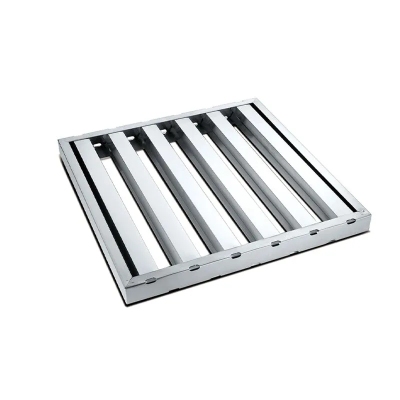
Why cleaning frequency is a fire question, not a housekeeping one
Every hour of frying, grilling and searing sends grease vapor toward the hood. The filters catch most of it, and whatever they catch sits right there in the metal, centimeters from a live flame. A clean filter is a piece of hardware. A loaded one is fuel with a fan behind it, pushing flames toward the duct if a flare-up ever reaches it.
That is why inspectors treat filter cleaning as a code matter. In North America the benchmark is NFPA 96, the Standard for Ventilation Control and Fire Protection of Commercial Cooking Operations, which governs hoods, grease removal devices and duct systems. Inspectors who open your hood are not asking whether the kitchen looks tidy. They are asking whether the grease removal devices have been maintained on a schedule that matches how you cook.
There is a cost angle too, and it is not a small one. A saturated filter chokes airflow, so the fan works harder to move the same air and the capture edge of the hood starts to spill smoke into the room. Kitchen staff feel it as heat and haze. The utility bill feels it as longer run times. Nobody labels those costs as filter costs, which is exactly why a written schedule pays for itself.
What NFPA 96 expects from your cleaning program
NFPA 96 does not hand every kitchen the same deadline. It scales the required cleaning of the exhaust system to the volume and type of cooking, and the commonly cited intervals look like this: solid fuel burning such as wood and charcoal is the heaviest load, and those systems are cleaned monthly. High-volume operations — the 24-hour diners, the busy fry lines, the charcoal grills that run all day — land on quarterly cleaning. Moderate-volume cooking is semi-annual, and low-volume operations such as seasonal sites or day camps can fall to annual service.
Where do filters fit in? They are the grease removal devices at the front of that system, and the standard treats them as the first checkpoint. A kitchen that lets its filters load up for months is effectively choosing the shortest interval for everything downstream, because duct and fan cleaning crews price their work against how much grease has escaped past the filters. Some jurisdictions write these intervals directly into local fire code, so the version your inspector enforces may name specific months. The safe reading is the same everywhere: filters are cleaned on the frequent end, and the whole system follows the interval your cooking volume dictates.
If you are unsure which bracket your kitchen falls into, ask the company that services your hood system. They see hundreds of kitchens and they know what a quarterly site looks like compared with a semi-annual one. Put their answer in writing and keep it with your cleaning log.
A weekly routine that keeps filters honest
Whatever the code interval is for the duct system, the filters themselves need attention far more often. A practical baseline for a busy line is simple: wash or exchange the filters weekly, and let nobody talk you out of it. Many operators run two filter sets so one is always in the hood while the other is drying. The swap takes minutes, and a kitchen that exchanges weekly never has a filter in service that is too loaded to survive until the next wash.
Between washes, a 30-second look at the start of each shift catches most problems. Hold the filter up to the light. If the channels of a baffle are shiny with wet grease or the weave of a mesh panel is dark and caked, the filter is past due. Check the drainage channels at the bottom — they should not be overflowing. Check the frame edges where the panel seats into the hood track; bent frames from rough handling let unfiltered air slip around the panel, and a bypass is worse than a dirty filter because it is invisible.
Log every wash. A simple sheet with dates and initials is enough, and it does two jobs at once: it keeps the routine honest on a Friday night when everyone wants to go home, and it shows the fire inspector a program instead of a promise. Kitchens that keep a log rarely argue about whether the filters were done. They can see when.
How to wash each filter type properly
Stainless baffle filters are the easy case. They have no fine weave to protect, so they go straight into the rack or flight dishwasher at the end of service, standing on edge so water reaches every channel. If a dishwasher is not available, a soak in hot water and an alkaline degreaser loosens the grease in twenty to thirty minutes, and a soft brush finishes the channels. Rinse well and let the panels dry before they go back in the hood — trapped water between panels is what breeds the chalky mineral film that is harder to remove than grease.
Mesh and nano panels need a lighter touch. Soak them, then brush gently along the weave rather than across it, because bending the wires out of line opens gaps that let grease straight through. Never hammer a mesh panel flat on a bench to "shake the grease out" — we have seen returned panels that were ruined faster by that habit than by years of frying.
One chemistry rule covers both types: keep chlorinated cleaners away from stainless steel. Bleach-based degreasers attack the passive layer that makes stainless stainless, and pitting that starts at a weld creeps across the panel within months. A non-chloride degreaser costs the same and adds years to the hardware.
Dry fully, inspect, refit. That is the whole method. The kitchens with filters that last a decade are not using better tools than the kitchens that replace filters every year — they are just drying and handling theirs with a little more care.
Warning signs you are already behind schedule
Grease dripping from the filter frame or the gutter below it is the loudest signal, and it means the filter stopped holding grease some time ago. Visible smoke spilling from the front edge of the hood during a normal service is the second: a loaded filter changes the airflow, and the capture edge stops doing its job long before anyone measures it.
Other signs are quieter. The exhaust fan sounds different, or the kitchen stays hot long after the dinner rush. Filters that used to come clean in a standard wash cycle now need a second soak — grease that has been baked on for months crosses from soft deposit to varnish, and varnish does not surrender to a dishwasher. And the sign nobody should wait for: a fire inspector writing down filter condition. A citation is just your schedule, announced publicly.
If two or more of these sound familiar, do not try to fix it with a heroic one-off cleaning. Pull the filters, wash what can be washed, and book the duct service. Then set the weekly exchange so the situation does not rebuild itself.
Building the schedule into your operation
A schedule that lives in someone's head dies the week that someone takes a holiday. Put it where the work happens: filter exchange on the closing checklist for a named day each week, the light check on the opening checklist every day, and the duct service interval pinned near the hood with the last service date written on it.
Match the filter inventory to the routine. If the plan is a weekly exchange, each hood position needs at least two panels per slot so the rotation never stalls. If your kitchen runs heavy frying or char-grilling, consider a deeper rotation — three sets — so a heavily soiled batch can soak overnight without pressuring anyone to put a wet filter back in service.
And when a filter retires — bent frame, cracked weld, pitting that cleaning can no longer reach — replace it with the same footprint and the same structure. Mixing panel thicknesses in one hood track leaves gaps that defeat the whole exercise. We cut custom sizes to match your existing track for exactly this reason.
The full routine costs less than one deep-clean surcharge. Wash weekly, log it, watch for the warning signs, and the inspector conversation becomes a two-minute formality.
Further reading
NFPA 96 — Standard for Ventilation Control and Fire Protection of Commercial Cooking Operations (nfpa.org)
OSHA eTool — Restaurant cooking safety: deep fat fryers (osha.gov)
Quick answers
How often should grease filters be cleaned?
Most kitchens wash hood filters weekly. NFPA 96 sets exhaust system cleaning by cooking volume: monthly for solid fuel, quarterly for high-volume, semi-annually for moderate and annually for low-volume cooking — and filters are the first line that decides how fast the rest of the system loads up.
Can grease filters go in the dishwasher?
Stainless baffle filters can. Run them through the rack or flight dishwasher at the end of service, or soak them in degreaser. Mesh panels need a gentler soak and brush so the weave keeps its shape.
What happens if I don't clean grease filters?
Grease build-up cuts airflow, strains the fan, shortens the interval before the whole exhaust system needs professional cleaning and — most seriously — gives a fire a fuel path straight into the duct.
Setting up a filter rotation?
Tell us your hood size and cooking mix — we will quote a spare set in your exact footprint, baffle or mesh, with handles to match.