Commercial Hood Filter Replacement: Stocking, Sizing and Sourcing
Wednesday close, and the night manager pulls a filter out of the hood track to check the bank. Two of the six panels are bent at the corners. One has a crack running through the catch channel. He takes a photo, sends it to his equipment guy, and the equipment guy sends back a question: what size? Nobody knows, because the panels have no markings and the hood brand plate was painted over years ago. The kitchen keeps running the cracked panel while the answer travels back and forth. Replacing hood filters should not require a guessing game. Here is how to stock, size and source replacements so the swap is a ninety-second job, not a three-week project.
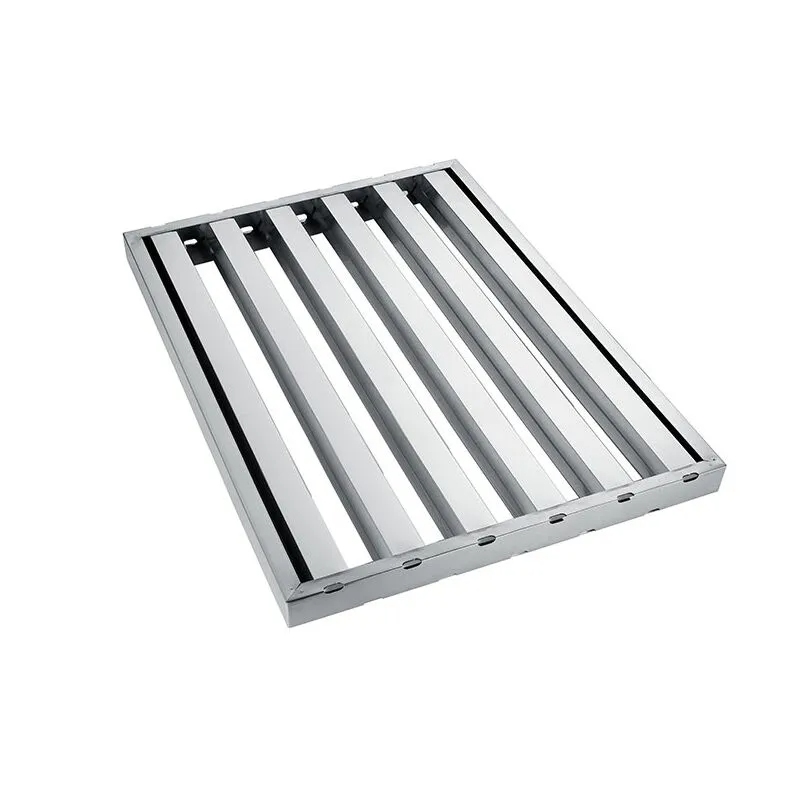
Why filter replacement is a stocking decision, not an emergency
Every hood has a bank of panels, and every panel eventually fails. Frames bend when they are dropped in the sink. Catch channels crack after years of heat cycles. Mesh weaves open up where a scraper caught them. The mistake is treating replacement as an emergency purchase instead of a stocked consumable. A kitchen that waits until the crack starts leaking grease into the duct is a kitchen that pays rush shipping and runs a compromised hood in between.
The fix is simple: keep a spare set per hood position. Two filters per slot means one is always in the wash while the other is in the track. That is the same logic kitchens already use for light bulbs and trash bags, except the stakes are higher - a loaded or damaged filter is a fire-safety issue, not a housekeeping one. Our hood filter replacement guide walks the physical swap, and the compliance guide explains what UL 1046 and NFPA 96 actually require of the filter bank.
Measuring the track before you buy anything
The panel that comes out of the hood is not the measuring stick - it has warped. Measure the track instead: width across the hood opening, height of the channel, and the depth the panel needs to seat flush. Most commercial hoods take standard panel widths, but the flange and handle styles vary between manufacturers. A panel that is a quarter inch short lets air slip around it, and bypassed grease goes straight into the duct.
Measure all four corners, because a hood that was installed out of level will show you a different gap at each one. Write the numbers down before you call anyone. A supplier who asks for track measurements instead of guessing has been burned by the 'just send me a filter' phone call. Our sizing guide shows how to measure and order a bank that fits the first time.
Baffle vs mesh: what belongs in your hood
Baffle panels catch grease by spinning it out of the airstream, and they are what most commercial hoods run. Mesh and louver panels catch more particulate but clog faster, and they are the right call for hoods over char-grills or heavy particulate cooking. The wrong choice is not about which is 'better' - it is about matching the panel to the cooking load under that specific hood.
If you are not sure which your hood takes, look at what came out of the track. Same structure, same footprint, same handle style. Our baffle vs mesh comparison details the grease capture, fire resistance and cleaning trade-offs, and the kitchen-type guide maps the right filter to the cooking volume.
What to send a supplier to get the right bank
Three things settle a filter bank order before it starts: track measurements, a photo of the old panel, and the hood brand and model if the nameplate is still readable. Send all three and the supplier comes back with a part number instead of a list of questions. We get these emails every week, and the kitchens that send the photo and the numbers get their quote same-day.
Ask about the alloy while you are at it. 430 stainless handles most kitchens and costs less. 304 resists the chloride attack that pits panels in hard-water kitchens. A supplier who asks what you clean with and whether the water is hard before quoting has seen pitted panels before - that is a supplier worth sending your measurements to. Our 430 vs 304 guide breaks down the steel decision, and the cleaning guide keeps the bank passing inspection between replacements.
Stocking the bank: two sets per slot, one in rotation
Two panels per hood slot is the number we quote most. One rides in the track, one sits in the wash, and the clean one goes up while the dirty one starts soaking instead of going in the trash. That rhythm catches a failing panel weeks before it becomes an emergency. Kitchens that stock this way replace filters on schedule. The ones that skip it run a cracked panel until the hood inspection fails.
Heavy frying or char-grilling? Add a third set so a soiled panel can soak overnight without anyone putting a wet filter back in service. The extra set pays for itself the first time a panel comes out of the wash still covered in carbon - you stop scrubbing and start swapping. Tell us your cooking volume and track measurements, and we will quote the bank that matches - request a quote with your numbers.
The signal that says replace, not clean
Blades warped. Catch channels cracked. A frame that no longer seats tight in the track. Those are the three signals that a filter is past cleaning, and no degreaser brings them back. A warped baffle lets air slip past the blades, and the grease that should have been caught goes straight into your duct - which is where the fire risk and the cleaning bills live.
A rough rule from our shop: if a filter needs more than an hour of scrubbing to look right, it is past saving. Replace it and put the labor back into the rhythm. Our replacement guide covers the wear signs in detail, and when it is time to order, the sizing guide and a photo of the old panel are all we need to build the right bank.
Quick answers
How often should commercial hood filters be replaced?
When the panel lies to you. Set it on the counter, level. Blades bow? Channel cracked? Frame rocking in the track? That filter is done - no degreaser fixes bent metal. Panels that still sit straight and hold water keep working for years. Replace the broken ones and keep a spare in rotation.
What size hood filter do I need?
Measure the track, not the old panel - it has warped. Width across the opening, channel height, depth to seat flush. Three numbers and a photo of the old panel are all the supplier needs. Flanges and handles differ by manufacturer, so send what you measured.
Are all commercial hood filters the same?
No. Baffle panels spin grease out of the air. Mesh catches particles. And the steel grade differs - 430 handles most kitchens, 304 holds up where the water is hard or the cleaners are strong. Buy for what you cook and how you wash.
Can I order hood filters wholesale?
Yes. Send your track measurements, panel photos and how many hoods you run. We quote the whole bank - baffle, mesh or Nano, standard or custom - with part numbers on the line. Multi-hood kitchens get the volume price.
Need a replacement bank that fits your hood?
Send us your track measurements and a photo of the old panel. We manufacture baffle, mesh and Nano filters to standard and custom sizes, with wholesale pricing for multi-hood kitchens.
Request a Quote